
Lantern festivals have always been built around light, colour and craftsmanship. But the way visitors experience them is changing.
Today, a lantern can do much more than simply glow. Colours can travel across a sculpture, animals can move, environments can respond to sound or touch, and interactive characters can react to the people standing in front of them.
At China Light Festival, these developments are part of an ongoing evolution. Designers, R&D specialists, project managers and experienced artisans work together to explore how new technologies can make traditional lantern art more immersive and engaging — without losing the craftsmanship at its core.
Zigong craftsmanship as the foundation
That foundation lies in the traditional lantern-making techniques associated with Zigong in China’s Sichuan Province. The art form has developed over centuries, and the Zigong Lantern Festival was officially recognised as part of China’s National Intangible Cultural Heritage in 2008.
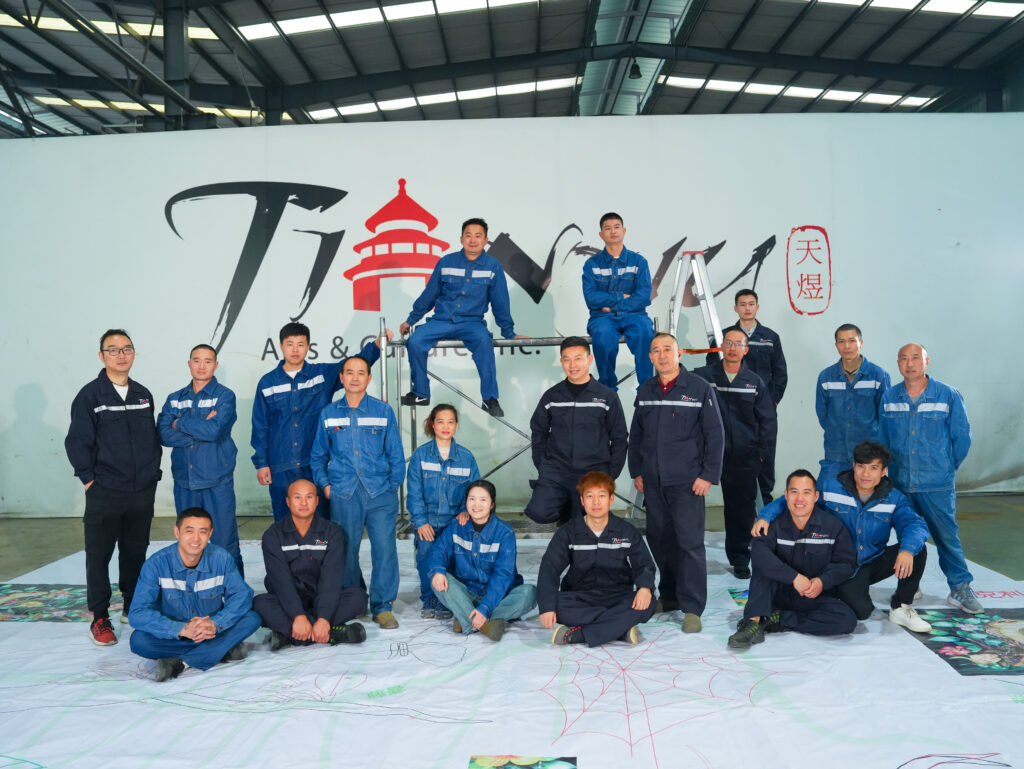
Experienced artisans still shape the structures, apply translucent fabrics and finish the details that give each lantern its character. Many professionals involved in this process have more than a decade of experience in the field.
Technology is therefore not a replacement for traditional craftsmanship. It provides new possibilities for bringing that craftsmanship to life.
How technology is changing the lantern experience
Where lanterns once primarily relied on internal illumination, modern technology has significantly expanded what is possible. Programmable LED systems can create colour-changing effects across entire installations. Light-chasing sequences can make movement appear to travel through an animal, plant or underwater scene. Mechanical systems bring creatures to life, while atmospheric effects such as smoke can add depth and drama to fantasy environments.
These technologies are considered from the beginning of the creative process. Rather than adding effects to an already finished lantern, designers and technical specialists consider how movement, colour, sound and light can strengthen the story they want visitors to experience.
An underwater environment, for example, might use flowing sequences of light to recreate the movement of the ocean. A mythical creature may combine mechanical movement and lighting to make it feel almost alive. The technology serves the story, not the other way around.
Where design, R&D and partner ideas come together
Developing increasingly sophisticated installations requires different areas of expertise to work closely together. China Light Festival has a flexible and collaborative structure. Depending on the project, partners can work not only with the sales team, but also directly with project managers, visual designers and R&D technical specialists.
This allows ideas to be explored from multiple perspectives at an early stage. Visual designers focus on the theme, atmosphere and storytelling. R&D specialists investigate how lighting controls, mechanics, sensors and programming can turn those ideas into functional installations. Project managers connect these creative and technical possibilities with the practical requirements of the venue.
For partners, this means there is a direct connection between an idea and the people responsible for bringing it to life. Creative ambitions and technical feasibility can develop together rather than being treated as separate stages.
From moving lanterns to interactive worlds
One of the clearest examples of this technological evolution is the transition from static displays towards installations that move and respond.
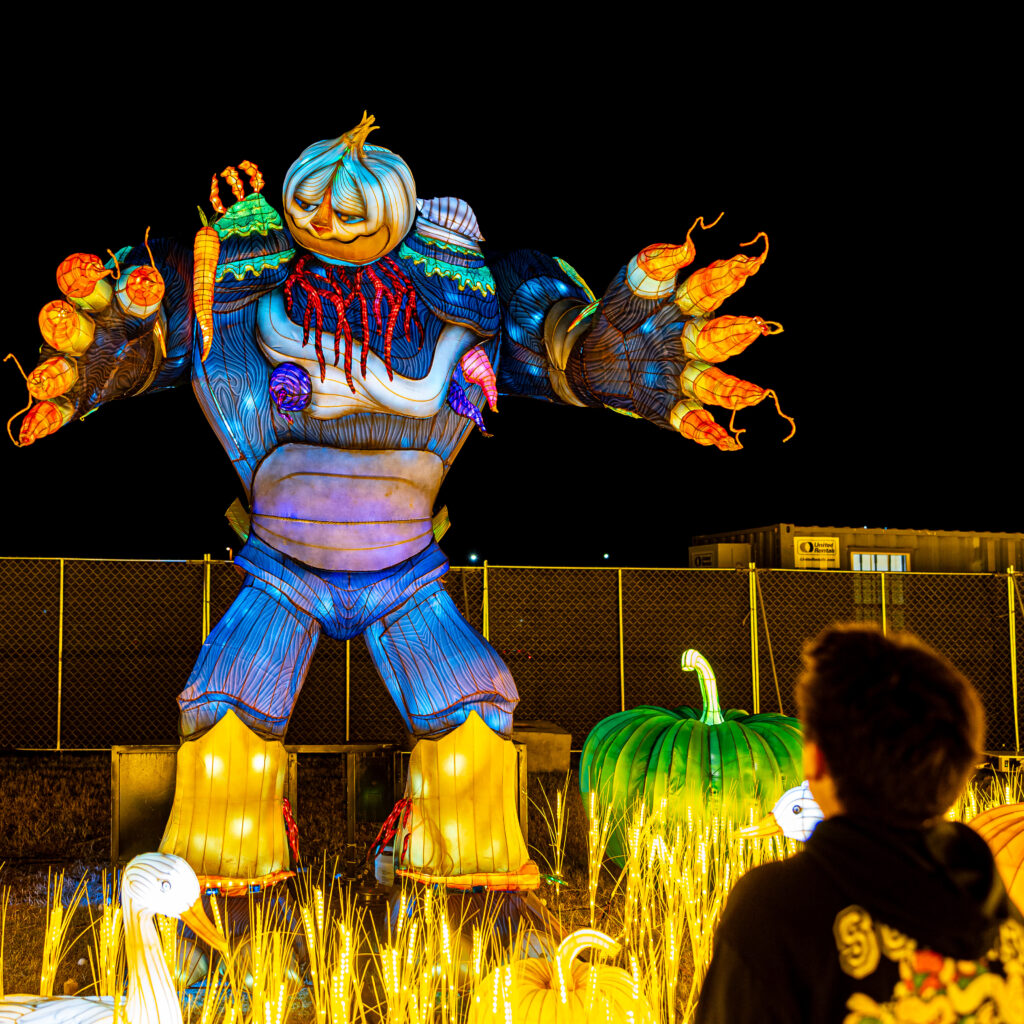
Our farm-themed installations demonstrate how different techniques can work together within a single environment. Mechanical movement can bring elements such as a windmill to life, while interactive characters create moments of surprise along the visitor route.
The Veggie Man, for example, remains still until a visitor steps onto a designated pad. The character then wakes up and begins to speak. What initially appears to be another lantern suddenly becomes an interaction.
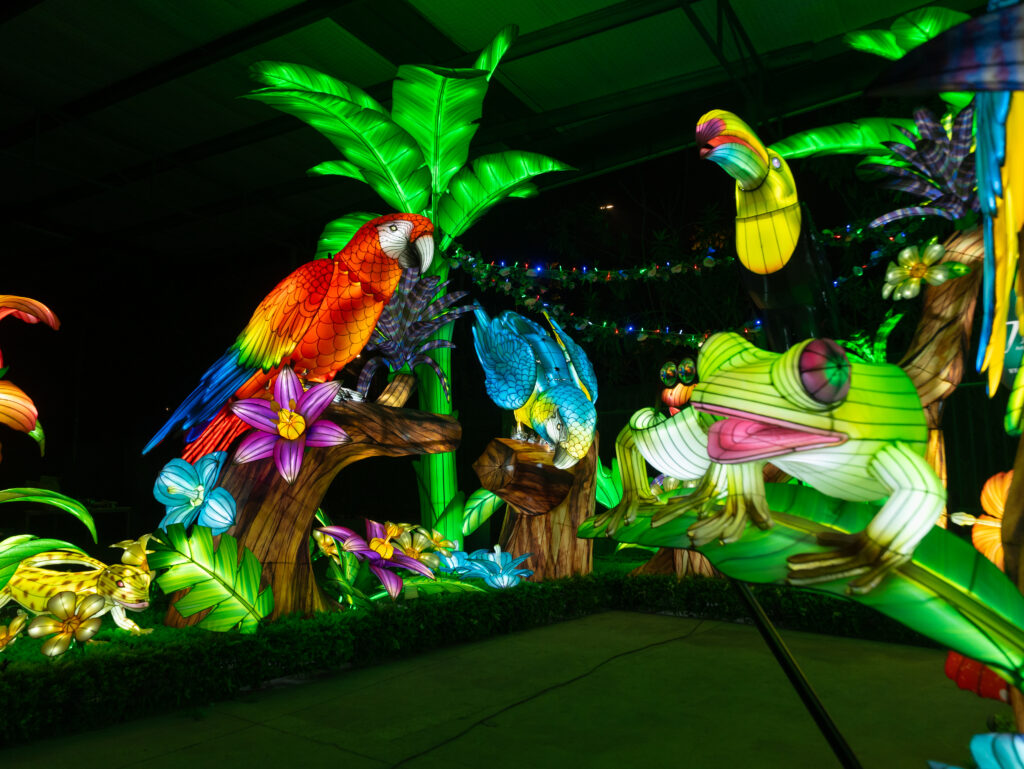
Other installations can respond to touch, movement, sound or presence. Visitors might cause light to ripple across a sculpture, change the colours of an environment or activate movement in a character. Take our jungles for example. A visitor wakes all the birds and little creatures living in it, by simply walking through it.
Not every lantern needs to be interactive. The important question is whether the interaction contributes to the story. When it does, visitors stop being spectators and become participants in the world around them.
Exploring the possibilities of AI
AI is another technology China Light Festival is continuing to explore, both during development and within selected interactive experiences.
Its role is primarily supportive. The creative direction, construction and assembly of the lanterns remain led by experienced designers, technical specialists and artisans. AI-assisted tools can support parts of the development process, while technologies such as computer vision and motion recognition offer new possibilities for responsive installations.
For example, an installation could recognise visitor movement and translate it into changing patterns of light. Interactive programming can allow an environment to respond differently depending on how people engage with it.
The possibilities will continue to evolve, but the principle remains the same: new technology should strengthen the experience rather than exist simply for the sake of innovation.
Making complex technology almost invisible
The more technologically advanced a lantern becomes, the more important it is that visitors do not see the complexity behind it.
Sensors, motors, speakers, control systems and wiring need to be integrated without compromising the appearance of the artwork. This is considered from the beginning of the design and engineering process.
Traditional steel structures provide space for incorporating technical components and carefully routing cables. Modular construction can divide technical systems into accessible sections, allowing components to be installed, inspected or maintained without dismantling the entire lantern.
The same practical knowledge is essential once an installation moves outdoors. Lantern festivals operate across many evenings and need to withstand changing temperatures, rain, wind and repeated interaction from visitors. Weather-resistant electrical systems, durable materials and reinforced structures help installations continue to perform reliably throughout the event.
All of this should remain largely invisible. Visitors experience a creature that moves, an environment that reacts or a world that changes around them, not the engineering required to make it happen.
What this means for our partners
For our partners, these technologies are not only about creating a more immersive visitor experience. They can also help venues extend their programming into the evening and attract visitors during traditionally quieter autumn and winter periods.
- More visitors: Extend opening hours and attract guests during quieter autumn and winter periods.
- More value: Longer visits can support additional ticketing and on-site spending.
- Stronger storytelling: Interactive and immersive installations can bring conservation, biodiversity and education themes to life.
- Wider impact: Additional revenue may support goals such as animal welfare, conservation and education.
Evolving without losing what makes lantern art unique
Lighting technology, interactive systems and AI-supported applications will continue to develop. China Light Festival continues to explore how those innovations can contribute to the next generation of lantern experiences.
But innovation does not mean leaving tradition behind. Every installation still depends on the experience of designers, technical specialists, project teams and artisans who know how to transform an idea into something that works creatively, technically and operationally.
That combination defines the evolution of China Light Festival: centuries-old craftsmanship as the foundation, modern technology as a tool, and immersive storytelling as the result.
Interested in exploring how traditional lantern artistry and modern technology could come together at your venue? Get in touch with our team and let’s explore the possibilities together.